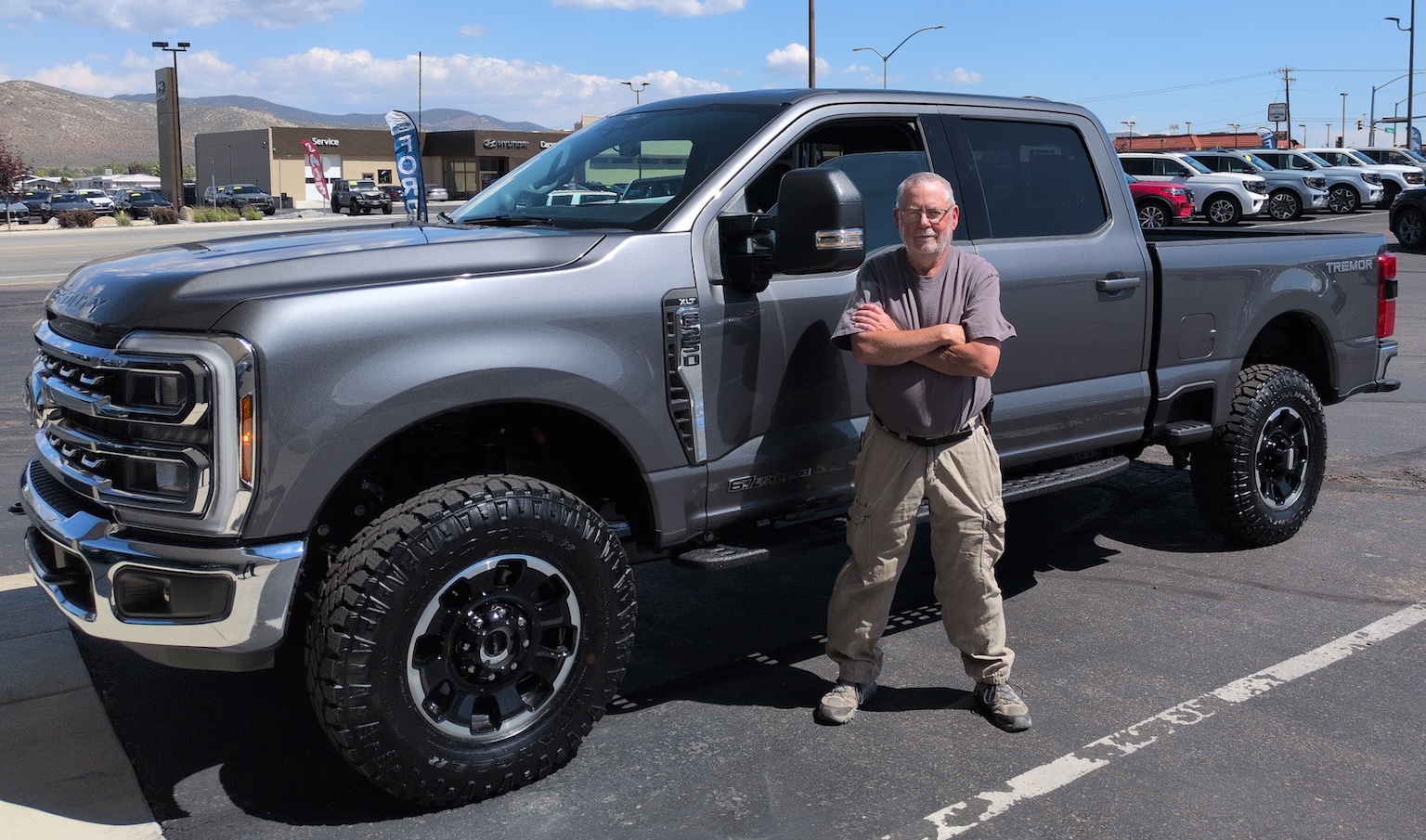
Gabriel, my sale rep at Capital Ford, shot this image of me (with his phone) right after going over the introduction to my new truck. Did I say it is a tall truck?
For the first time in nearly 14 years, I own a new vehicle. I decided that I did not want to use the 4Runner as a tow vehicle any longer. I want to keep it running well for many years, yet. My camper is not over the vehicle’s limit, but there were many times I thought I was stressing the vehicle more than I wanted to.
I also think I want a slightly larger camper. These are things mentioned here a number of times, whenever they come mind.
I decided to buy a diesel truck. My friend has had good luck with Fords. So have I, although it was a long time ago that I had an F-150. I do not care for the fit and finish of the Dodge products, although the Cummins engine has quite the reputation. The GM products seem to focus on the Allison transmission and less on the Duramax. So, I bought a Ford.
I love my truck, but do not intend it to be my daily driver. It is for work and pulling the camper, either to remote locations or cross country.
My friend helped me install a VHF/UHF radio in it. I have a place for an HF rig as well (and have the rig). I am slowly adding a few things to make it work better for me. I want some MOLLE racks in the bed so I can lash equipment and keep the bed organized.
The truck has the power to pull anything I want to pull. On Field Day, the camper was barely noticeable behind the truck. In fact, I have to be careful not to muscle the camper. It is not up so some of the rough roads we travel without care. The truck has no problem.
So, my next step is to find an appropriate camper. I am thinking an Arctic Fox might do well, given I have frozen my tush off any number of times in the A-frame. I need cold weather capability. The additional storage will be good, too.
This could very well be my last new vehicle. That is not sad; just an observation.
I am quite grateful. Life is good.
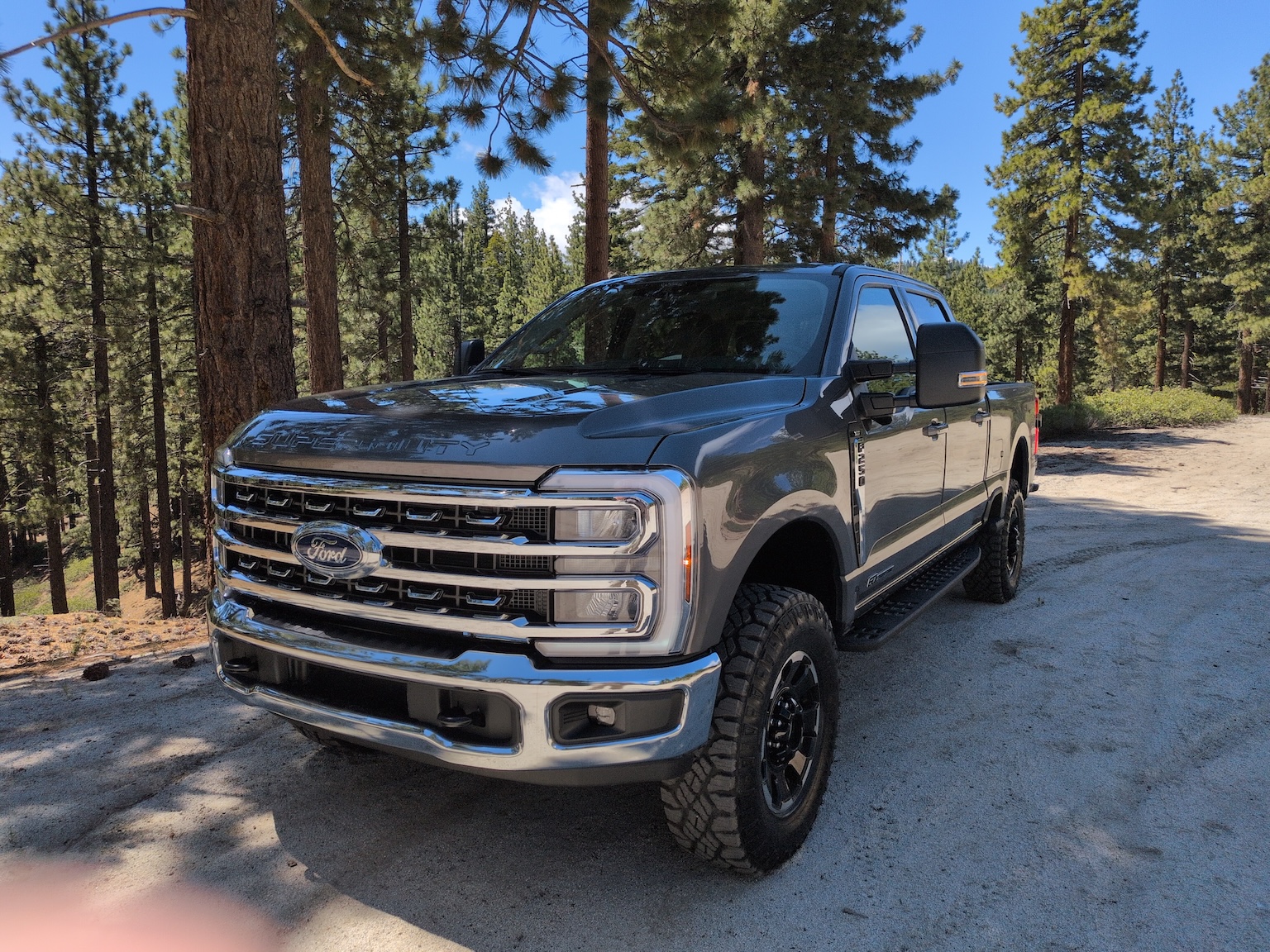
It is a good looking truck, parked up at the Spooner Summit/Kings Canyon Trail staging area.
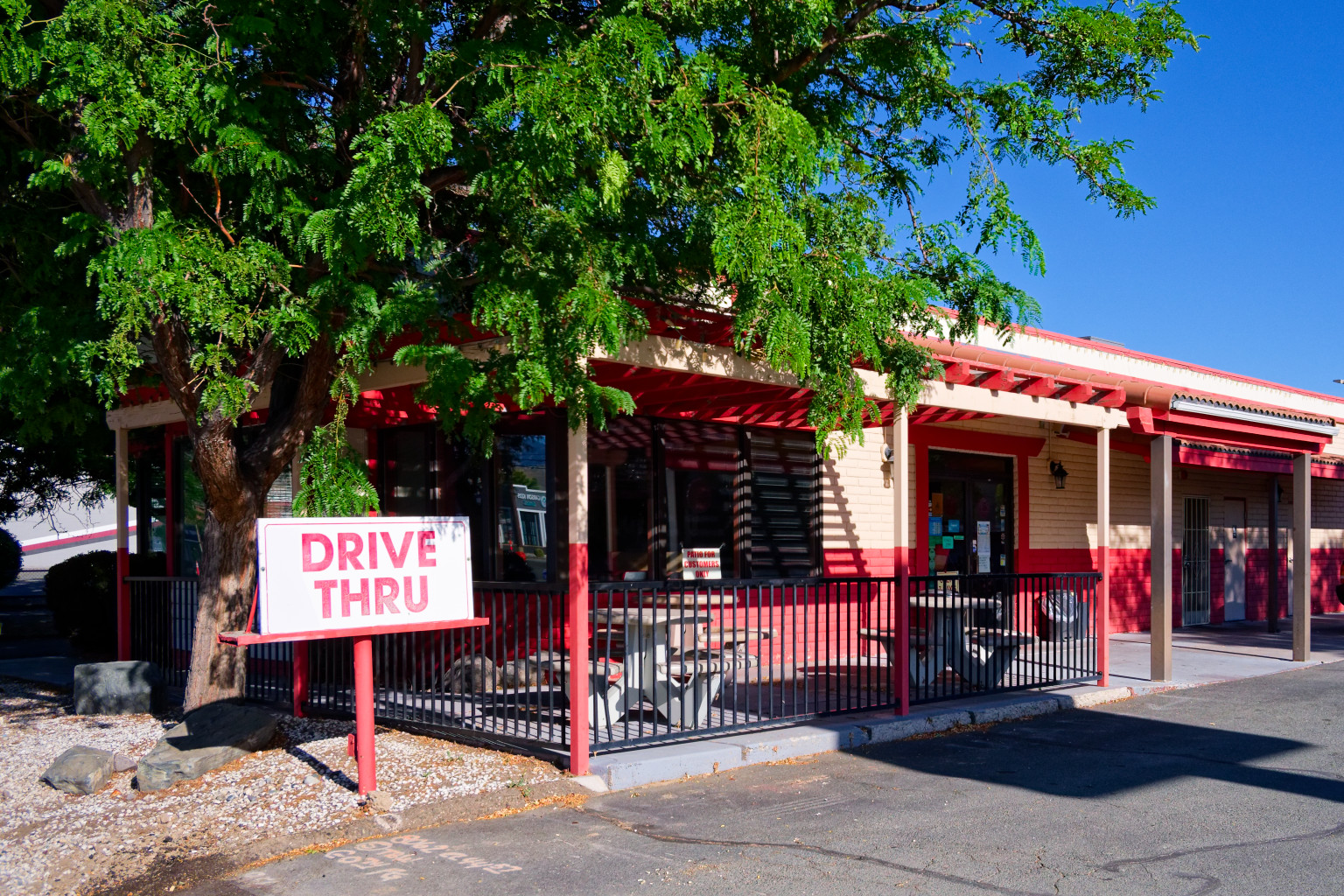
The Girl and I walked a different route last Saturday. I had the truck at the service center for an oil change, so we walked the big block around that area. This Chinese joint caught my eye. Captured with X-Pro3, 2026-07-25 08:13:57, Voigtlander Color Skopar 18mm, 1/1600sec, f/5.6, ISO-400, processed in DXO Photolab 7.
I have not done a remainders post in a long time. My energy has been used up by other tasks of higher priority than maintaining my weblog. Yet, my weblog remains a part of my life and is important to me, for reasons I do not really understand. I see things, I read things, I make photographs, and somehow my brain amalgamates this material and the results need to go someplace. Decades ago I created this space to hold those results. So, here we are.
In looking through my archive this week, I came across a story: Play Misty for Me. I read it and remembered the day, clearly. The encounter was striking and as I write this I wonder what happened to Misty.
Another story came up on the same day as the line above about Ki. I think the writing is pretty good, for what it is. It is worth sharing.
I am a sucker for just about anything made from G-10. Well, this slingshot is calling to me.
I think I mentioned that I am keeping the 4Runner for use as a daily-driver and the occasional trail run. Well, that means there are a few things I want to do that I should have done. The dash is certainly in need of a cover. Covercraft seems to be the place to go for a dashmat.
I will do some small things to make the truck work better for me. The glove box organizers from Open Trail Creations will provide useful cubbyholes for keeping the generally loose s*$t from being, well, loose.
I also have in mind upgrading the fuel tank to a 60-gallon tank. I am still working on that.
Well, that is a restart of my remainders practice. It will be seen if I can maintain it.
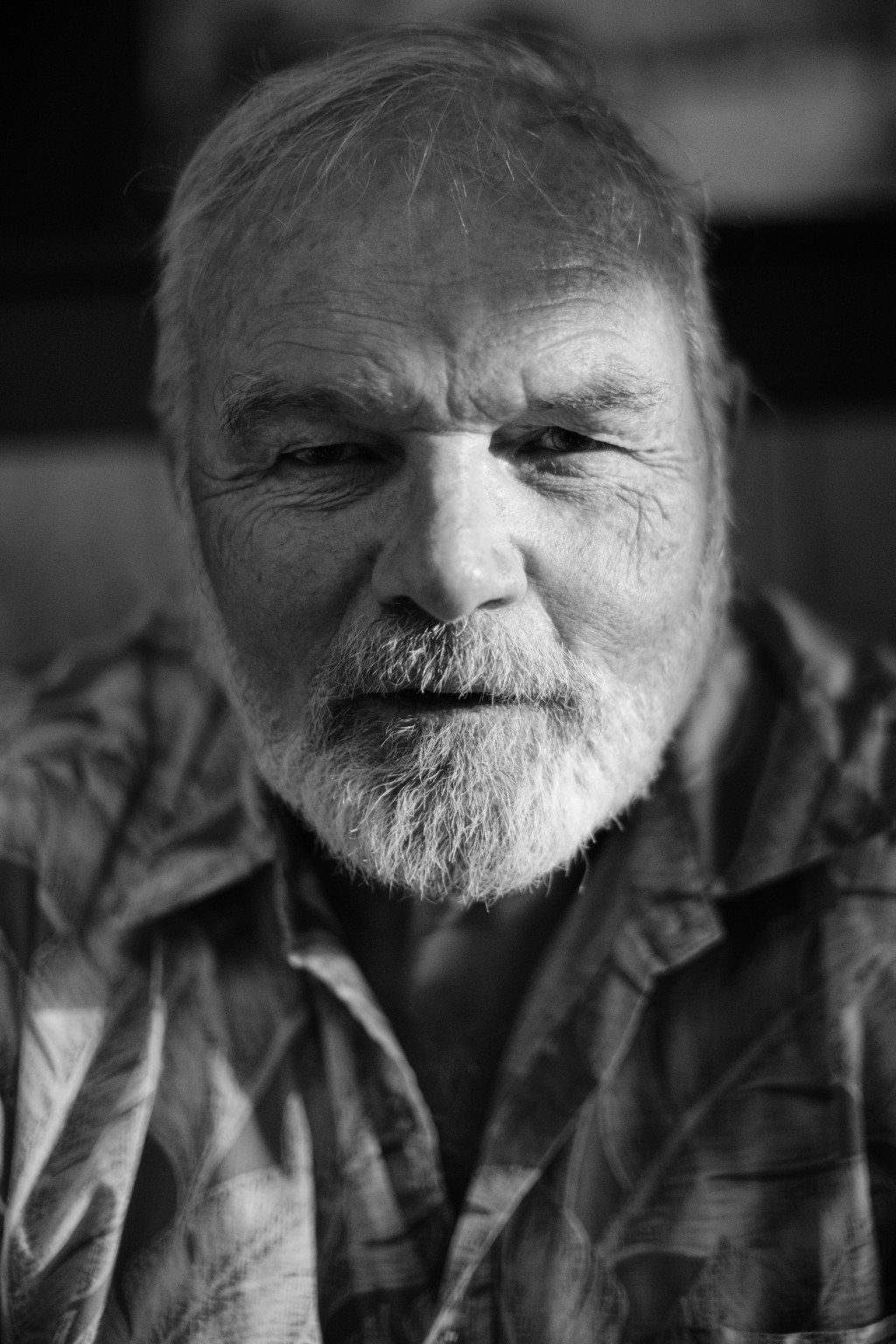
I had the Mitakon 35mm f/.095 lens on the X-Pro3 and noticed the light on my friend’s face. I made the capture. Captured with X-Pro3, 2026-07-25 18:49:23, 35mm, 1/550sec, f/0.95, ISO-800, SOOC.
I had a Miticon/Zonghi 35mm f/0.95 lens affixed to the Fuji X-Pro3 last Saturday night. I decided the lens needed to be shot, so I mounted it.
While we chatted over supper, I noticed this light fall across my friends face, so I made a few captures with the camera. All were shot wide open. Focus is a bit of a challenge, but I got it.
I quite like the rendering. I will sell the lens to my buddy, who will enjoy it. I have my eye on a Voigtlander 35mm f/0.9. It has contacts to convey lens settings to the camera. I prefer that.
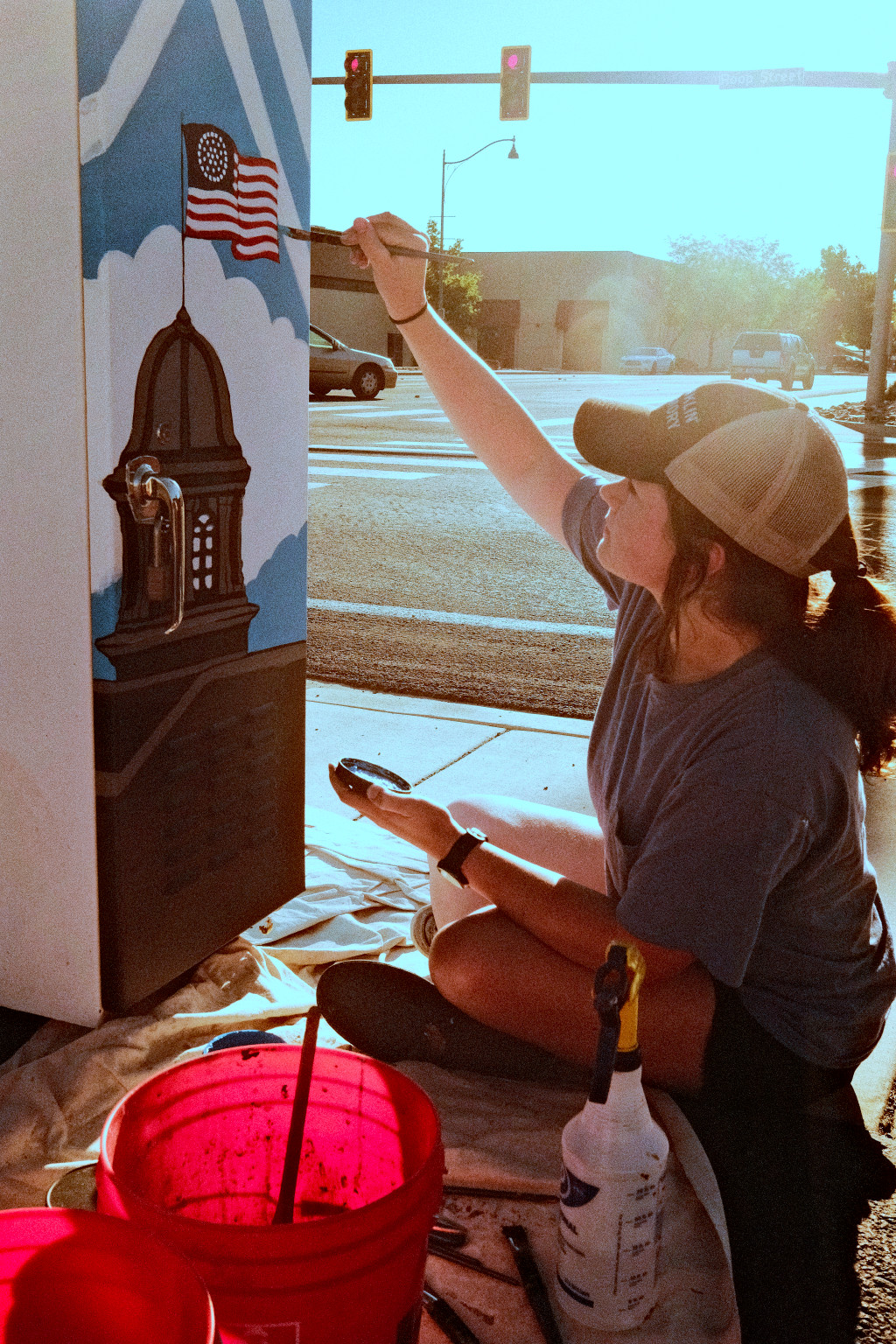
This young artist was painting the signal vault at Fairview and Roop. I asked to make an image and she took a few minutes to visit with The Girl and I. I love the capture. Captured with X100VI, 2026-07-29 07:56:44, 23mm, 1/3800sec, f/8, ISO-2500.
On walkies a couple of mornings ago, I spotted this young artist working on a mural on the signal vault along our path. It was second time I saw her at this site and she looked to be finishing up. It is good work and I love watching people who are good at what they do.
So we crossed and I introduced myself. Sera took up with Tasha immediately and they are now best buddies. I asked for a photograph and she yes. So I made a handful of captures, but with the Sun in the background. I was concerned about image washout and/or lens flare. But I could not work the sunny with The Girl along — traffic at this intersection at the time of day is bad. So I got what I got.
She gave me a couple of stickers for my kids and that gave me a contact. I pulled the images later in the morning (about noon) and decided that they are OK. I actually like the lens flare and the color balance was easily corrected. So I sent the image to her and asked for another opportunity next time she is doing a project like this. My plan will be to take a film camera, probably the Bronica, and make some more images.
All in all, it was a good walk and great outing. Her energy and enthusiasm gives me hope for future. Life is good.
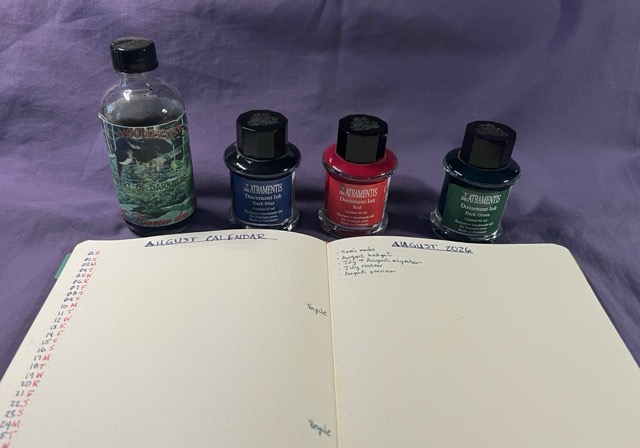
This is my monthly spread for August 2026. I decided to get started on the migration a little early. Captured with iPhone 13 Pro, 2026-07-27 16:45:21, 5.7mm, 1/60sec, f/1.5, ISO-100, SOOC.
July is rapidly coming to an end. And so, it is time to think about closing out the month and beginning a new one. Part of my ritual is to create a new monthly spread in my Bullet Journal. This gives me a chance to review the previous month and preview the upcoming month.
The last few months I noticed that my monthly ritual feels compressed. I have invoices to get out, time cards to complete (for one client), a monthly budget to sketch, and the monthly migration in my principal tracking tool — my Bullet Journal.
The compression makes the process feel rushed. What should be a positive exercise becomes a chore. The month change should be something to celebrate — there is work completed and work to anticipate. In this instance, I mean work as the progress of living, which includes my vocation but also my avocations and simply a celebration of life. Life is good!
So, this afternoon I was reflecting on the upcoming conversion and decided that I would go ahead and layout my August monthly spread and will prepare my paper budget as well. Both will be sketches to fill in as I migrate from July to August. But, August will fill in as I move into the first week of the new month. My prayer is that preparing the sketch a few days early will reduce the busy-ness to the extent that it will produce positive energy and make me feel better rather than pressured.
The Noodler’s Heart of Darkness is in the frame simply because it is the backbone of my journaling. It is not present on the spread. I used the deAtramentis Document Inks in Dark Blue, Dark Green, and Red. I do not think they produce a dark red or I would try that. I like the contrast the red gives the for day. The dark green is for my recycle days (I need a reminder).
I used a dip pen again this month. I overloaded the stub nib slightly, so the headings are a little blotchy. It is a kind of art (my poor attempt) so I do not care (really). The ink flow is good with the fine nib. The stub requires frequent re-inking; the fine nib less so (of course).
This process gives me a certain pleasure… a satisfaction of progress and keeping notes of things that are important to me. It relieves the stress of remembering (hat tip to David Allen for brain dumps) tasks and appointments and provides a solid record of what I did with my time.
I made the image with my iPhone 13 Pro. The only post-processing was to crop ever so slightly and resize the image. Yes, I keep an iPhone in my inventory for now. I have my old phone number, also for now, as a backup because so many people have that number. I do not want to miss an important contact.
As I reflect, I remember to be grateful. Every day is a gift. Life is good.
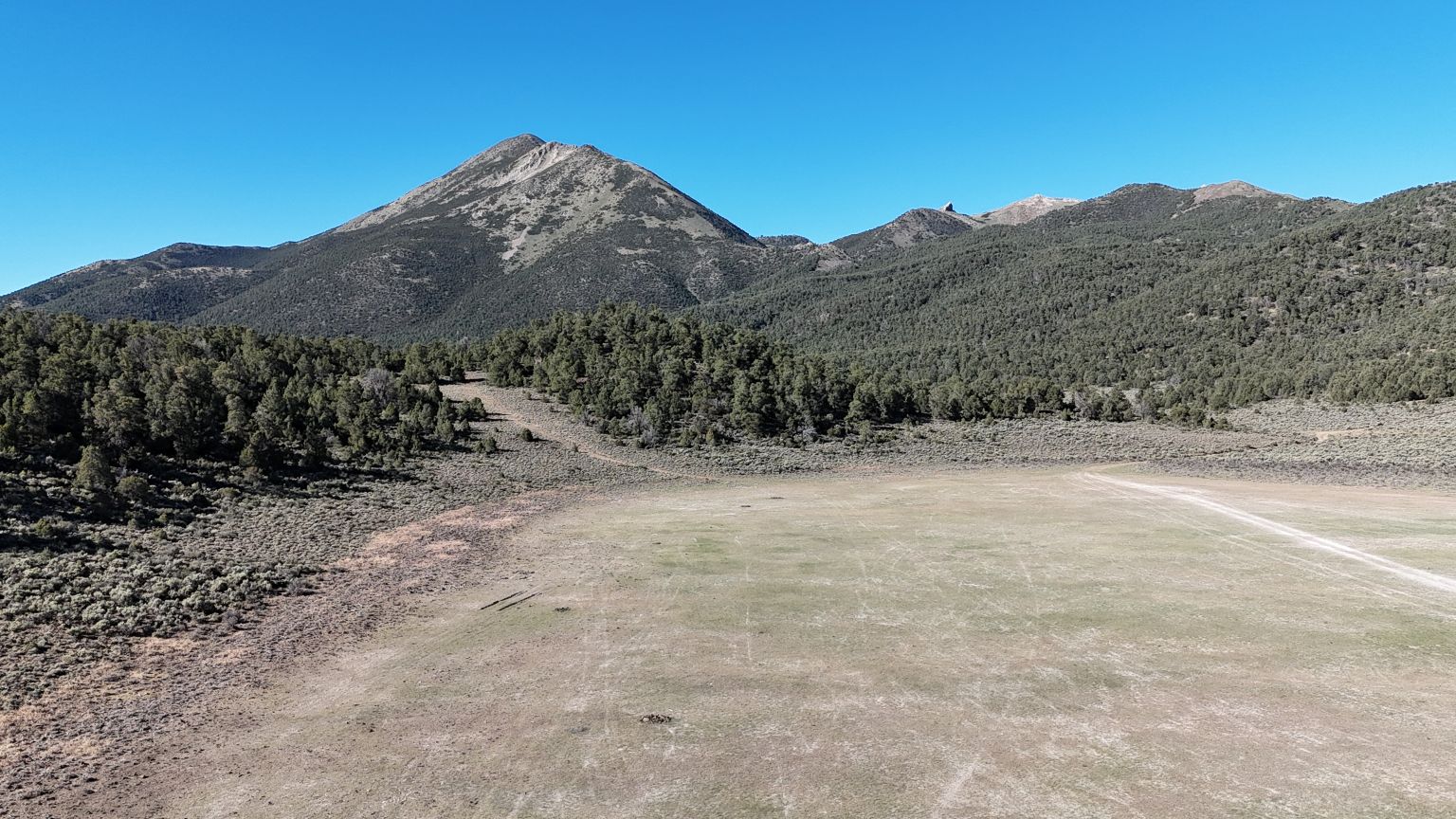
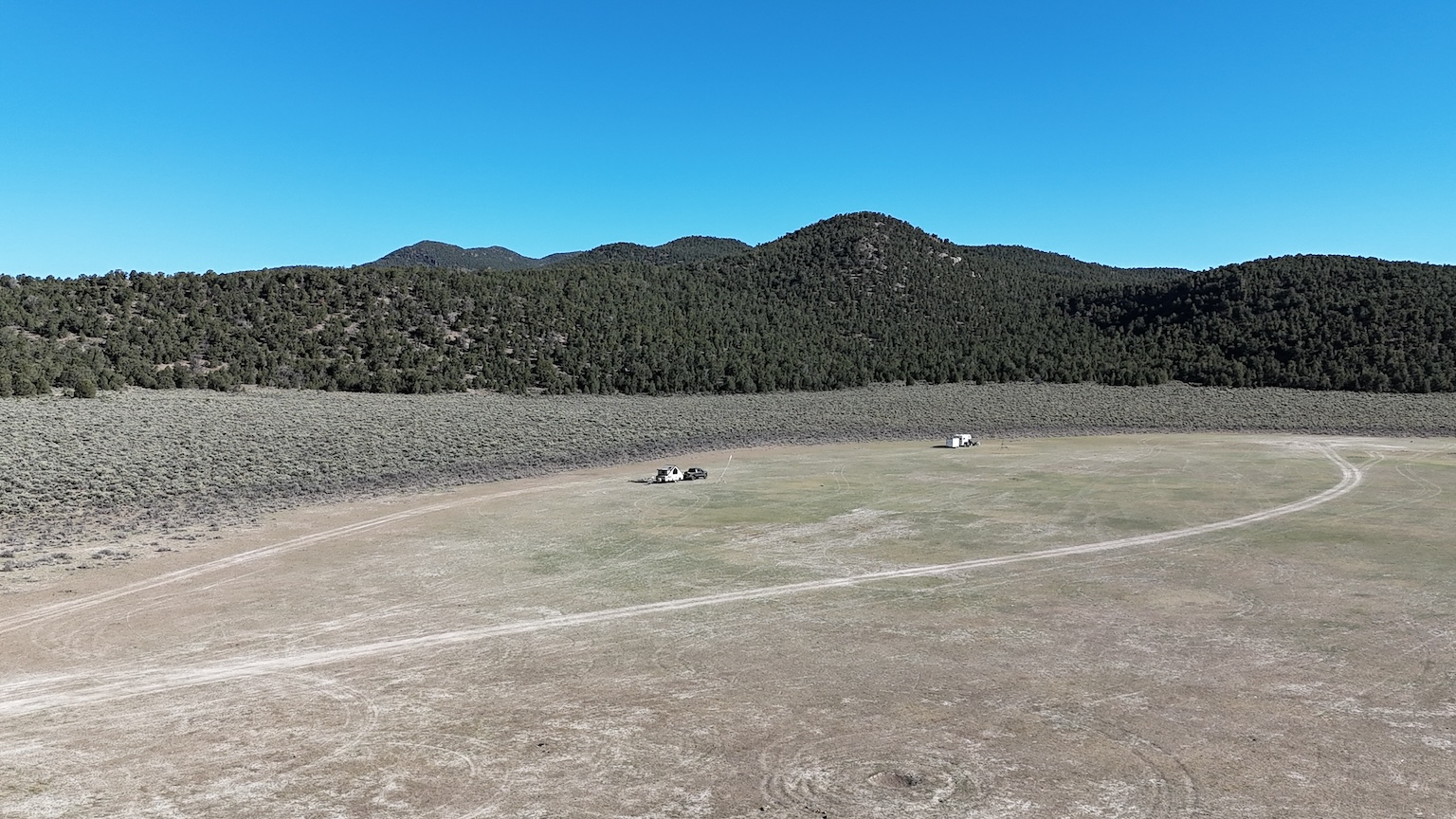
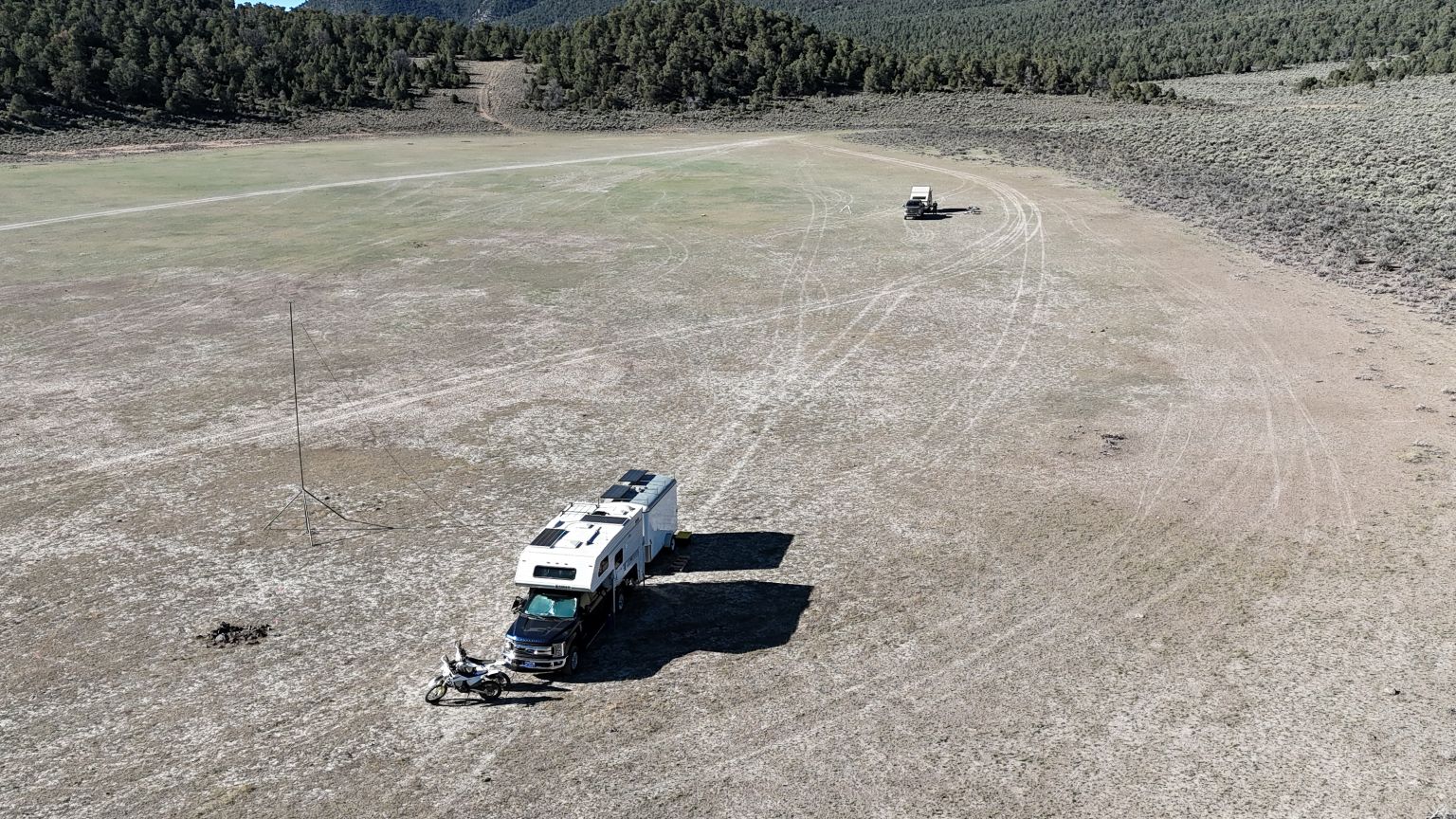
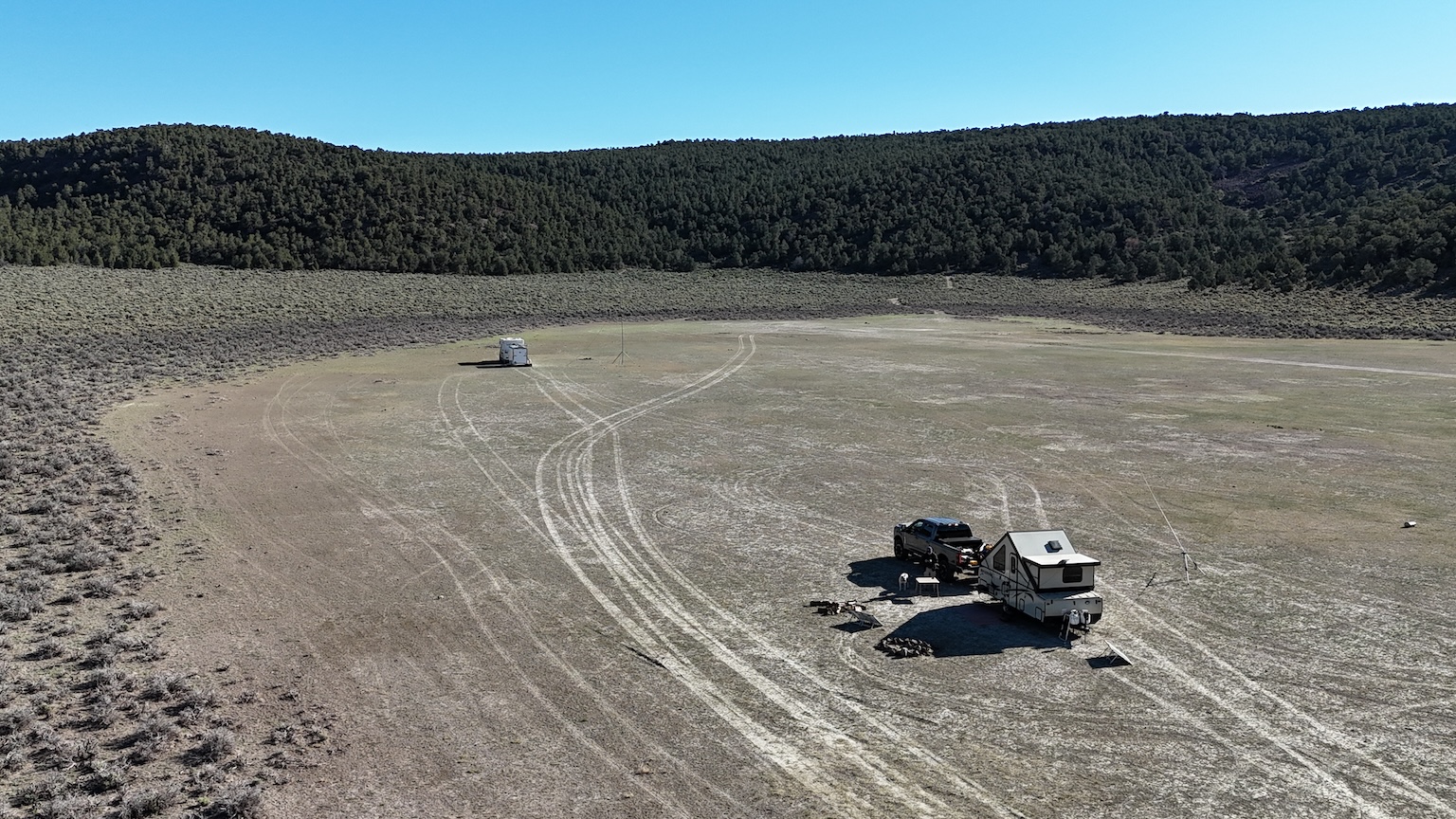
This is an aerial view of the south part of Desert Creek Dry Lake, our Field Day expedition site.
Field Day 2026 has now come and gone. Here is my after action report for the deployment.
Planning: In my case, there was a lack of planning. Work kept me very busy for first third of the year. Once that report was delivered, I found myself in a cycle of catch-up. Although less intense, there were many projects that needed attention that were delayed because of the hard deadline from the critical project. As a result, I had little energy left over from work to plan and prepare for Field Day.
That said, I still determined a plan for my travels to and from the selected site, a brief meal plan so I could provision the camper, and general care of the camper before taking it out for the first big run of the year.
I bought a new Ford truck this year, specifically to tow my camper. After struggling with the 4Runner being my tow vehicle (my only vehicle), I had a notion that I want a little bigger travel house. I do NOT want anything near the size of a fifth wheel as I find those ugly and they are unlikely to be manageable for many of the places I like to camp. But, something a little larger than the hard side is desirable because I want a little more room and a fair bit more storage.
As it stands, the hard side is acceptable, barely. There is insufficient storage for more than a few days afield. It lacks a grey water tank and the black water tank has limited capacity (a few days). There is insufficient storage to keep things put away, which is a requirement for a small house. It lack sufficient insulation should temperatures fall much below freezing (probably 20-25oF is pushing it). I have frozen the water several times since I bought the camper in 2019.
Therefore, a replacement is in order an that demands more tow vehicle. So, I bought a truck with more than adequate capacity because I never want to drag a long pull at 35mph again. In addition, I do not want to damage the 4Runner, which is still a solid vehicle.
I was able to pull some basic maintenance on the camper. My buddy helped me check and pack the wheel bearings and confirm that the brake shoes remain adequate. I sanitized and flush the water system. I reprovisioned the propane tank that I use to run the gas grill. I wiped down the interior surfaces and checked that the fridge operated on electricity and gas.
I assembled my radio station, which was based on my ancient Yaesu FT-897d. I often use it for POTA activations and I like the way the rig runs. I have an LDG tuner affixed to the rig, so it will match just about any antenna. I decided to use the Chameleon MPAS 2.0 deployed as a Delta loop, which I have now used several times for POTA activations. The station computer was my MS Surface Go 2 with a small external keyboard. This computer is often used for field deployments, although I usually log POTA activations on my phone.
I made a grocery list and made the trip a day or two before leaving. Groceries went directly to the camper to reduce the likelihood of missing something when transferring materiel from the house to the camper.
I threw some clean clothes into a bag and gathered a few things (including food) for The Girl. I also made sure that my logging program, N3FJP Field Day Log, was updated.
On loading day, I staged everything at the door so I could keep track. It took me about an hour to stow things in the camper and the truck.
Travel Out: I decided to leave an extra day early because this Field Day would be my mini-vacation until later in the year. So, I rose, took care of my usual morning obligations, and took the remaining few things to the rig before recovering the camper to travel configuration and make a few last passes through the house to ensure nothing critical was left behind.
The Girl watched nervously, knowing I was preparing to leave and wanting to go with. She obediently stayed on-place (on the sofa), though. But, I could feel her eyes on me with each trip to the rig.
Hook up was easy with the advanced backup camera of the new truck. I pulled the camper from its spot and drove to Industrial Way, where I stopped to close the hitch latch and do another walk-around to confirm everything was secure. I also used the opportunity to check camper lights before heading out.
We drove down to Minden to refuel at the Maverick there. I have a new Nitro card to use and save a few bucks on fuel, but it was my first time at the high-flow pump and there was some confusion about my PIN. So, a trip into the store was required to get the pump activated so I could refuel. I think this problem is now sorted, but have not refuled yet.
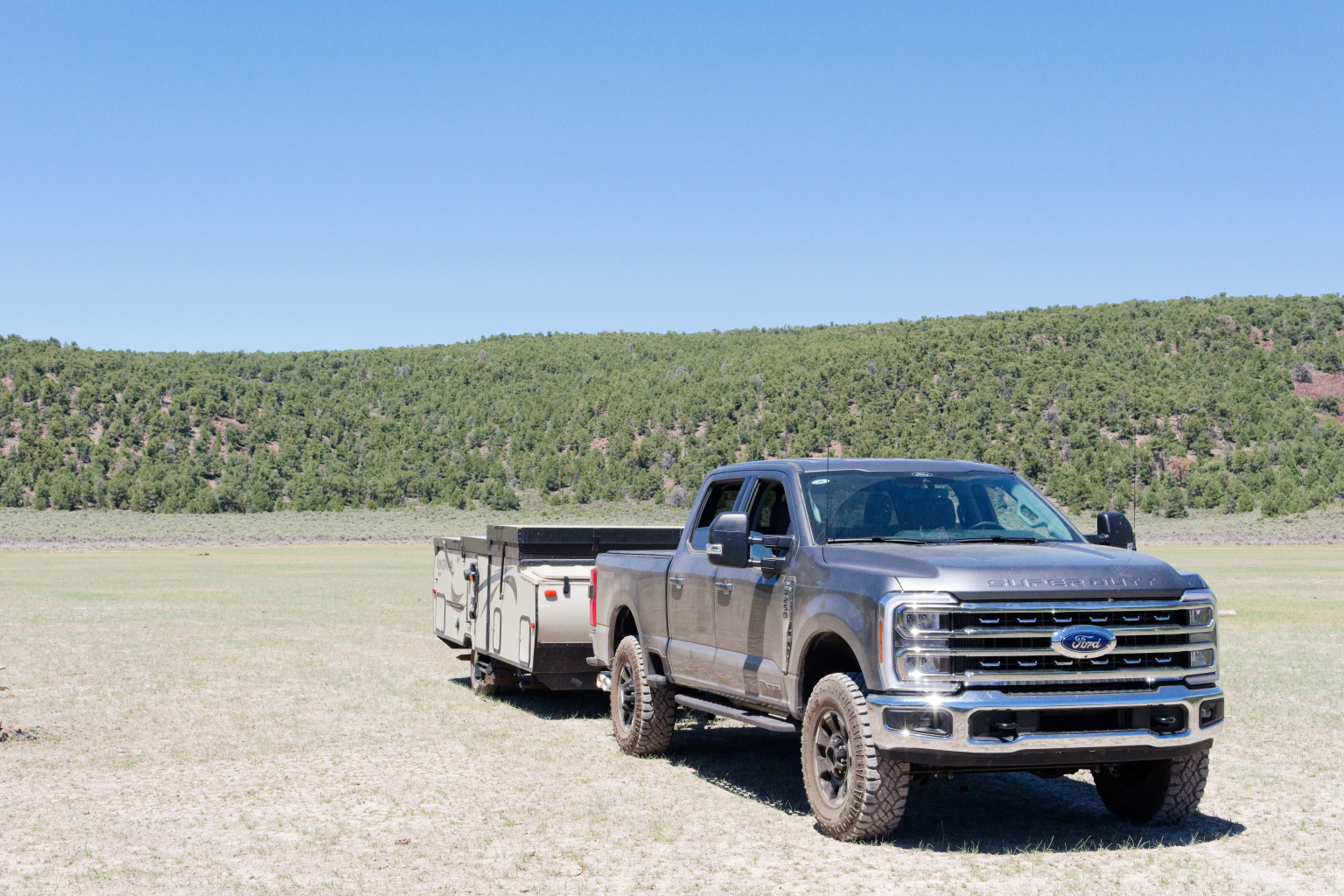
I made this capture not long after arriving on site for Field Day. The camper looks small compared to the truck. Captured with X-T5, 2026-06-24 17:27:21, 33mm, 1/3200sec, f/8, ISO-1600, SOOC.
We drove out toward Topaz Lake and took the cutoff to Wellington at Holbrook Junction. The truck pulled the camper effortlessly. The rear-view mirror is high enough to see over the camper. The towing mirrors are wonderful and visibility from the truck is outstanding. What an incredible upgrade this was. *%#$ing expensive! but wonderful.
I took it very easy on Risue Road to avoid beating up the camper. The truck will easily muscle the camper, so care is required. The truck has a Trail Mode that functions as a trail cruise control and I was able to keep my speed down to under 5mph where needed and a little faster but still under 10mph where the road was better. Doggo danced and chirped with excitement as we entered the National Forest and she could see chipmunks and other critters.
We arrived at camp about 1400h. It was pretty hot, mid- to upper-80s and I was a little concerned that I had not brought the generator to run the A/C. I shrugged, though, and hoped that the weather would be a little cooler. I picked a campsite, rolled the rig around to point the galley/dormer south, and parked.
I got The Girl out for some exercise so she would be calm while I deployed camp. Well, I hoped she would be mostly calm, anyway.
Here is a view of camp from the southeast.
Setup: I unhooked the camper and leveled it with the hitch stand, then pulled the truck away. Then I went about deploying the camper and getting the interior setup before starting on outside work.
I was unable to erect my EZ-Up alone. I think I now have solo-deployment figured out, but the EZ-Up is currently trashed and unusable. That is a foreshadowing.
With camp basically setup, I put my outside chair and folding table in the shade of the camper (lacking the shade of the EZ-Up), and deployed a beer and a snack. Doggo hung out with me, keeping a sharp eye out for invaders and begged nibbles from my snack. I offered her a beer but she declined.
This was my opportunity to just let go of everything building up to this point. A major project was complete and billed out. Another report was in review. Other work was pending and would have to be dealt with, but there was time. So, I simply took time to be and listened to the wind blow, the bird call, and a whole lot of quiet.
I left the VHF/UHF rig turned on in the truck so I could hear any traffic in case someone called. I had absolutely no phone service. The Starlink Mini was not yet deployed and I was not very interested, nor did I need Internet access at the time.
As evening approached and the Sun drifted down toward the west, it cooled a bit on the playa. The Girl and I made a circuit around the perimeter so we could both get some exercise. After our outing, I opened another beer and made some supper. I did remember to turn off the radio in the truck so as not to run down the batteries.
It was cold, or at least felt cold the first night out. (That was Wednesday night.) It felt good and The Girl was quite snuggly. On cool nights, we share our warmth with each other. A good friend once told me “It’s good to have another beating heart in the house.” He is right.
Thursday morning dawned and I roused at morning twilight, as I usually do when camping. I made a coffee and stepped outside, glad to have brought a cover. I watched the Sun shine on the mountain to the south (visible in the image at top) and enjoyed my first coffee. As I prepared to make my second, Doggo roused about and asked to go out. So I carried my mug and we walked to the sagebrush line so she could hunt and relieve herself.
I made some breakfast, leftover refritos y arroz with a fried egg (over medium) tossed on top. I had a leftover bite for her as well, which she gobbled with joy and then finished her kibbles. We got out and made a circuit around the playa before I deployed my antenna and setup the FT-897 on the outside table (in the shade).
By mid-morning, I heard a call on the truck’s radio and answered. The other half of the crew was on the way and I got an ETA. They arrived before noon, so we walked over to greet and offer help with camp deployment. None was needed, so we left them to their work.
Here is a view of camp from the north.
Friday afternoon I started working on getting digital modes operational with the FT-897. I have a Digirig Mobile I bought for the rig and have the 9,600bps data cable as well. Yaesu has a hardware set maximum speed for these rigs, with a choice of 1,200bps or 9,600bps. There is a software setting to control data speed as well. But the cable configuration provides a hard limit on throughput. Of course, 9,600bps is plenty for amateur radio use.
The struggle that I had, however, was working out how to get all of the pieces talking to each other correctly. I find Winder$ extremely had to manage sound for radio radio use. There are too many different software components that affect audio in and out from the computer to the radio. The radio settings are relatively straightforward. They are critical to get right, however.
It took a couple of hours of hard work and some Internet research to achieve some success with WSJT-X, JS8Call, and Winlink. Levels into the computer were still weak and only fixed when I turned on AGC in the Winder$ sound control for the Digirig device. This was counter to my research.
The Starlink Mini saved the day. I was able to do the required Internet research to make things work together in some reasonable (if non-optimal) fashion.
I used my Bluetti power station to provide DC power for the Mini and work well. The Mini is stingy with power consumption, running about 20w when under moderate load. This means that the Bluetti could power the Mini for a bit more than two days without recharging the Bluetti. I also built a Anderson Powerpole to DC plug that permitted me to charge the Bluetti from one of my 120w foldable solar panels. It was easy to keep the Bluetti charged.
Field Day: Field Day was unremarkable, mostly. With only the two stations and three operators, we forewent the traditional startup net on the 2m/70cm bands. I kind-of missed that. I spent the day switching mostly between CW (Morse Code) and digital (FT8) modes, running a frequency in FT8 and playing search-and-pounce in CW mode. Normally I have more traffic when running a frequency than I did this time. My Montana buddy was unable to hear me (we could chat using the Starlink Mini). I did send a couple of Winlink messages, but had difficulty finding a Winlink node that could hear me (and vice versa).
I took a supper break and broke bread with my friends. Then I returned to the radio and continued working until about 2200h local. I hit the rack and went right to sleep.
When I woke, again with the morning twilight, I rose and made a coffee. I also turned on the FT-897 and listened a bit. As usual, the Asian broadcast stations were audible on the 40m (7MHz) band. They do not seem to have a presence on the lower portion of the band, so code and digital work well.
Over coffee I continued to work stations a bit, but did not make a lot of contacts.
Doggo woke and wanted a morning outing, so I made another coffee and we got out so she could do doggie things while I enjoyed my coffee. The air was cool and I enjoyed to morning golden hour while she hunted rodents. Her business done and my coffee nearing the end, we returned to the rig. I made some breakfast and fed her.
I continued to work stations the remainder of morning until my time ran out. Then I shut down and we walked over to visit our friends.
I forgot to mention that late Saturday afternoon the wind collapsed my EZ-Up. The tarp I had deployed to provide shade when the Sun was at a lower angle was too much lateral stress given the wind. The scissor beam on the upwind size bent laterally. Even with the tarp removed (losing a good portion of the shade), the wind was sufficient to continue the collapse. I finally had to remove the tent from the frame and roll the frame onto its top. The skeleton looked like a dead spider. It meant I had to work indoors and my camper is a solar collector.
Recovery:
I left my radio setup and thought I was activate the park one more time (Humboldt-Toiyabe National Forest) before quitting. I waited until the day turned over (GMT) and worked enough stations to make an activation.
We all shared a meal to celebrate another successful Field Day. It was a fun time together and these are good people. Sera and I got in another circuit of the playa before we turned in for the day. I do not recall doing much Sunday evening. I chatted with my Montana buddy over Signal a little.
Monday morning we repeated our morning rituals. I did get out my drone and flew it around the playa while the wind was down. I wanted to capture some video footage and a few aerial still images. I then started tearing down the radio station and putting camp away.
While putting things away, my buddy came over and we stowed the EZ-Up. We got it to fold up so it could be put in its bag and stowed in the truck. In other words, the dead spider was recovered.
On our way out, we paused for a little fun. I brought a .22LR long gun and a handgun. We scavenged a few tin-can targets and played for an hour or so. I think I shot about hundred rounds of ammunition and the little rifle is a blast.
After policing up after ourselves, we headed home. I think it takes as long to travers Rissue Road as it does to drive the highway home. We did pause in Wellington, Nevada for lunch at The Glass Onion. It is a good place to stop and the food was excellent.
The remaining trip home was also unremarkable. I do enjoy dragging the camper with the truck. There is no more struggle with the trailer. The truck has more than adequate power and torque. The low-end power of the diesel engine pulls exceptionally well.
Lessons Learned: Every deployment brings at least one lesson learned. Field Day 2026 was no exception. In fact, I think I learned a couple of valuable lessons.
Even when I am busy with work or other duties, I must set aside time to plan and prepare my camper, radio equipment, and software before leaving for camp.
Part of that planning is building a punch list for each category of necessities and then checking it as I collect and stow needed items.
It is useful having Internet service in the field. Even if access is light-duty (limited bandwidth), problems that require research beyond what is at hand need the Internet now. This might not have been true before the Internet Age, but it is certainly true now. I do not think the digital setup problems I had with the FT-897 would have been solved with just the radio’s manual.
Be sure to document the deployment, even the ugly parts. A camera (cellphone at a minimum) and drone (for aerial imagery) are handy for this purpose.
Digital modes with some radio equipment are non-trivial. Setup of WSJT-X, JS8Call, and Winlink for the FT-897 was quite different from my experience with the Elecraft rigs. In fact, I am not confident that I have the system correctly, or optimally, configured as I write. More work is needed here and this is work best done before it is needed1. My friend was a lot of help debugging the problem, too.
Field operation is fun! Even without the challenge of configuring digital modes for my rig of choice, there were still a few problems to solve. Solving problems in the field is a necessary skill and will be vital in a real emergency deployment.
My camper needs and VHF/UHF rig installed in it with a readily deployable external antenna.
I had an insufficient number of USB C cables with me.
End the end, it was a good outing to celebrate Field Day 2026 with good friends. The playa is a good place to camp. The weather was cooperative, even if the wind folded up my EZ-Up. I love to camp and get away from city noise and energy. Doggo loves to go. I love my friends.
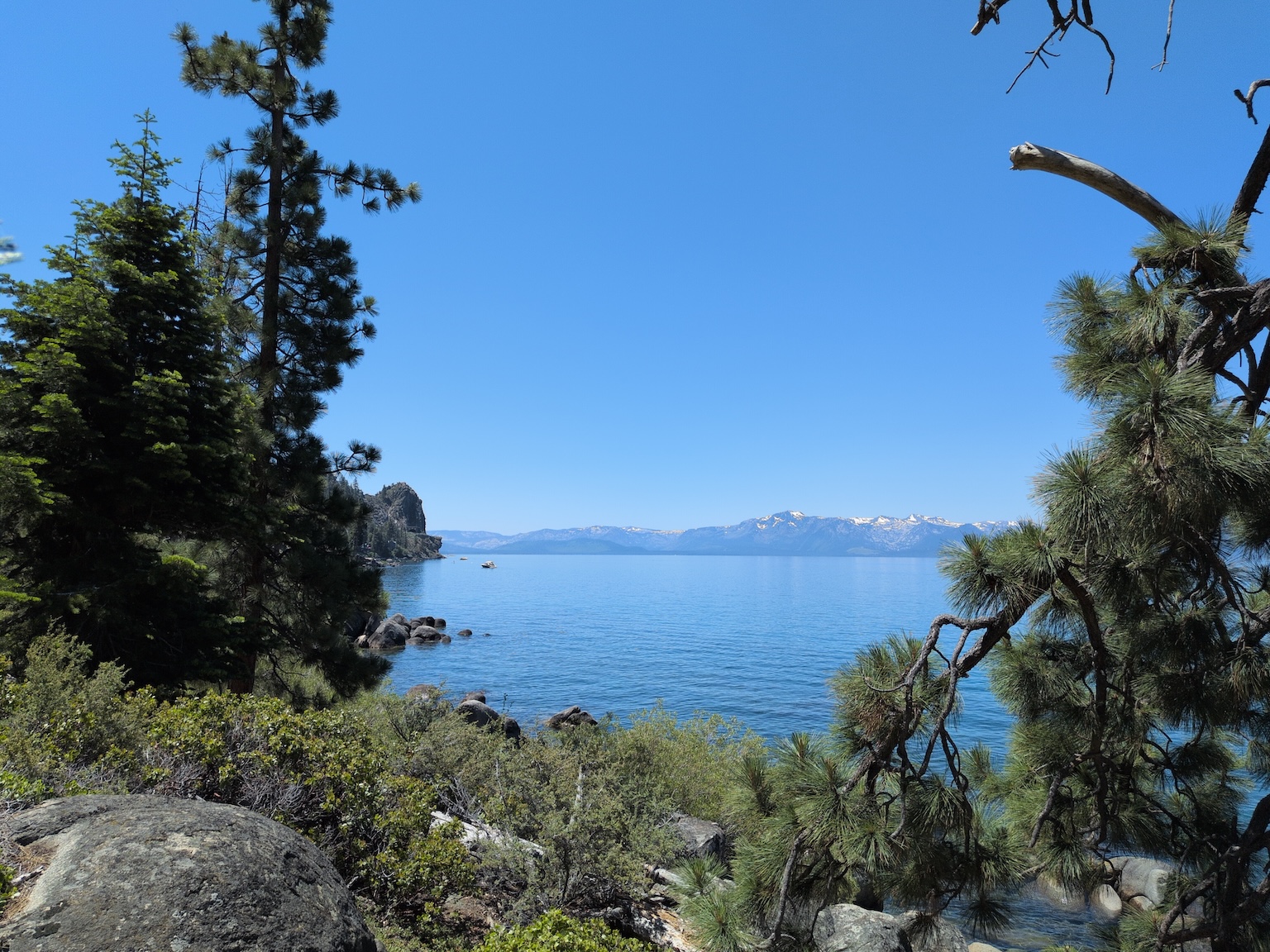
It’s been a bit since I last stopped here for a hike down the the lake. It was hot today and The Girl was hot and dusty after our Spooner Summit hike. I decided to take her to the lake to wash and cool off. It was good. Capture with Pixel 9a.
The last week or two has seen a lot of days that are hot for western Nevada in June. These days feel more like what we experience in August. Some might say this represents global warming, but I understand that this is weather, not climate. Anyway, it has been hot.
The Girl and I have taken our daily hikes to an elevation of about 7,300ft. It is generally much cooler there and the pines provide substantial shade. Depending on the time of day we get out there, I might zig-zag through the shade the tall trees provide and avoid the direct Sun in between. The light-colored DG reflects a lot of heat, so it is a kind of double-whammy when walking in the Sun.
One day after our hike, The Girl was pretty hot. (Well, she is always hot, but I mean over-heated.) I decided to take the truck down to Logan Shoals and hike down to the lake so she could cool off in Lake Tahoe. This avoided a lot of construction on US50 and gave me an opportunity to visit a favorite place in the area.
There were not too many people at the location, we parked readily and started the hike down to the lake. There are many trails bushwacked through brush, but they can be steep and a bit treacherous. We got down with no mishap and found place to work our way down to the lake.
Sera was a little tentative about the boulder scramble, but she got down to the water and had a nice drink. Then she laid down the rock she was standing on and got wet up to her midline. That cooled her substantially.
We worked our way back up the hill, which was a pretty good climb. I sent a text message to a colleague about possible lunch, but she was buried with deliverables. So The Girl and I drove home via Kingsbury Grade, which gave me some more practice with the truck and a cool ride home.
All in all, it was good outing and good day. Life is good.
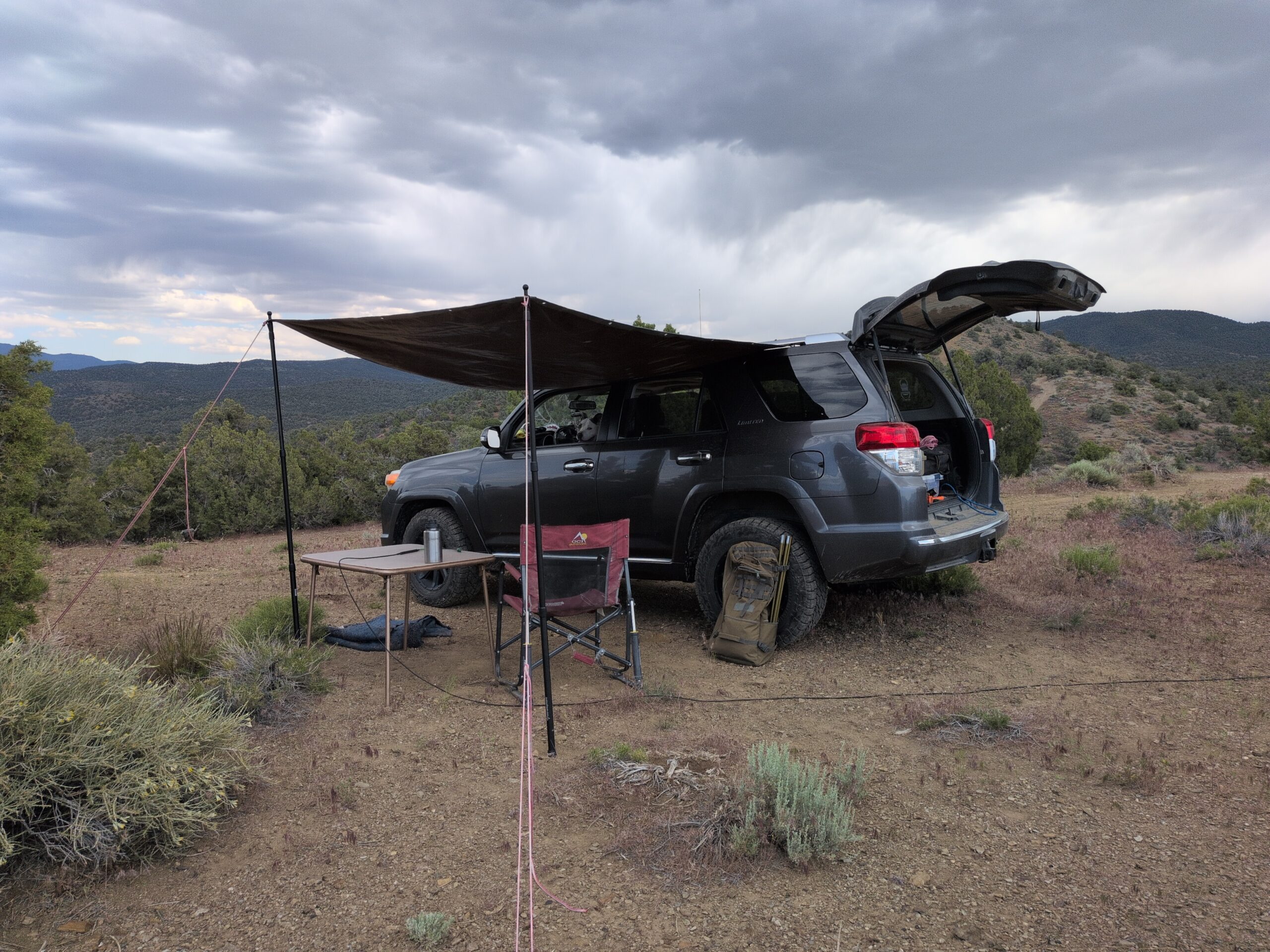
A few weeks ago I assembled another tarp-based awning for my 4Runner. The Kelty Wayfarer does not make the cut. The material is so light and thin that infrared radiation from the Sun passes through. Although it makes some shade, it does not block insolation heat.
My Toyota 4Runner has been my primary vehicle for more than ten years. I bought it when Wife was sick and we were making a daily trip to Truckee during the winter for her radiotherapy. She was struggling in and out of the sedan and there was enough snow that I wanted more capability.
When I started playing radio I found myself in a group of light adventurists who like to do field operations. So the 4Runner got a few upgrades so I can better negotiate trail driving and then started pulling a small camper.
I learned that I really like camping, and in particular, dry camping. There are so many places to go here in the west where camping is free and unencumbered by developed campgrounds. I also learned that I like state campgrounds, particularly when the sites are spread out.
In any event, for a couple of years, I used an emergency tarp (5×7) to make some shade. It was OD on one side and aluminized on the other. What made it effective as an emergency blanket (tarp), made it effective for desert shade.
Sadly, though, it was light duty and after several deployments it failed. Instead of pressing my second unit into service, I abandoned the approach. Most of the time, the 4Runner’s hatch provides enough shade if it is just me. However, if I have a guest, then it is cramped.
I tried a Kelty Wayfarer, which hangs off the back of a SUV. However, the material is light and thin. Although it provides shade, it does not block infrared from the Sun. Therefore, it is still hot under the canopy.
That lead me full circle. I bought a 6×8 reflective tarp (heavy) and a couple of telescoping poles. I have suction mounts for the rig. I am able to quickly deploy good shade/shelter from the 4Runner (and I think the pickup as well). I bought a second tarp to double up or to add a lean-to for additional shade/shelter on the sunward side.
This approach works. Shade is good, particularly in the summer desert Sun.
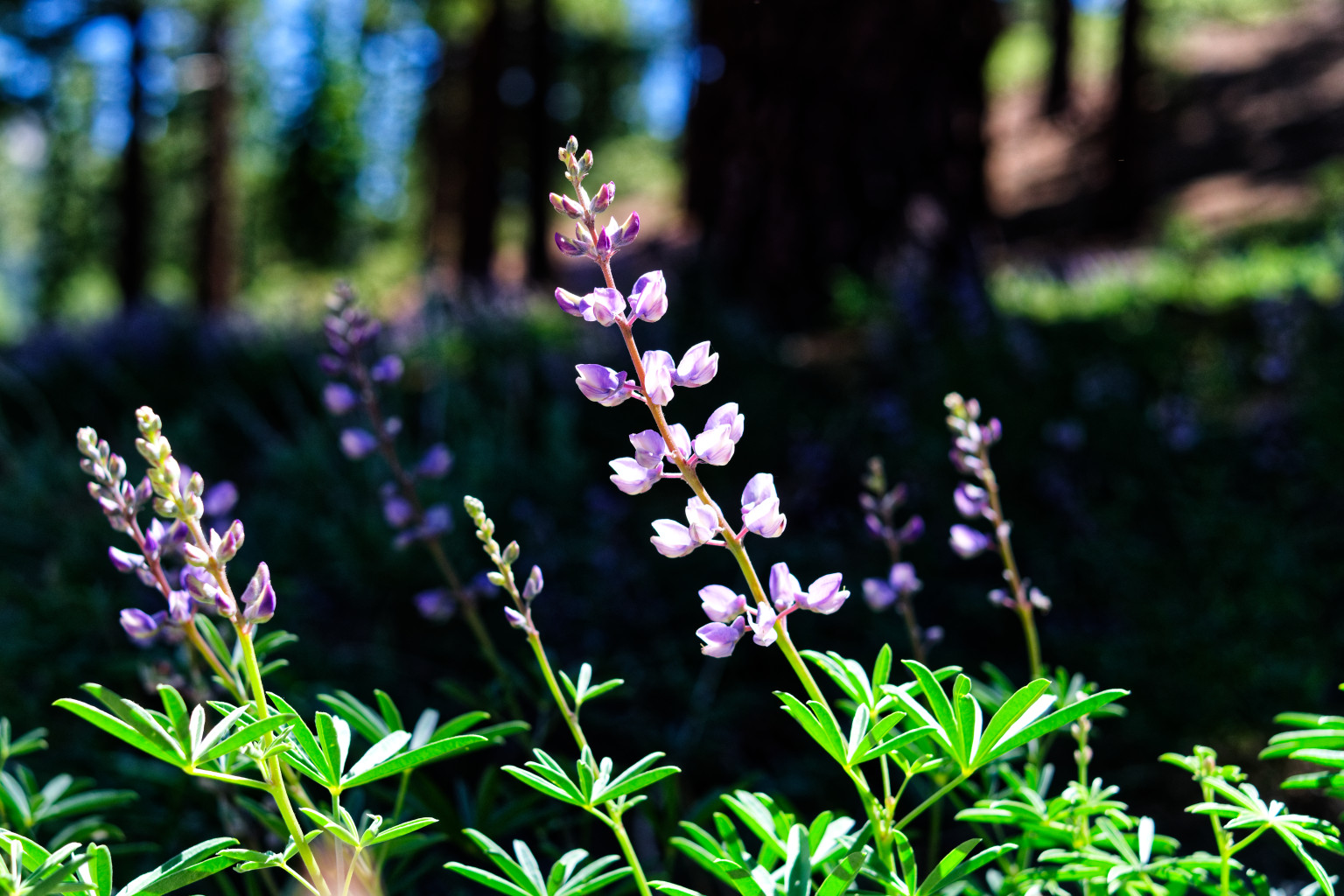
At elevation, the late spring Lupine is blooming. These are a favorite wildflower and remind me of the bluebonnets in Texas. Captured with X-Pro3, 2026-06-09 10:33:23, Fujinon XF 35mm f/1.4, 1/1000sec, f/4, ISO-400, light DxO editing.
I find myself in another busy period. Fortunately, a number of projects rolled off the active list. Some of them went inactive and others are complete or at least nearly so. A slow-paying client finally paid their bill so I had a large influx of income, which replenished my bank account.
It turned hot here in Carson City — too hot for June and more like late August. I have new window fans and they are much better than those that they replaced. They are quiet enough and keep my place mostly cool enough. The shade sails are up, which mitigates the direct Sun on my apartment and reduces the heat load some. The portable swamp cooler keeps the living room under 80F most afternoons and I can tolerate that.
The forecast for today is a high of near 100F. This is unusual for Carson, but not unheard of. I might decide to take the truck out for a long run late this afternoon. I need to drive it at highway speed for a half-hour to clear the exhaust filter. Yes, I now have a diesel-powered Ford F-250. I decided that I do not want to pull my camper with the 4Runner any more. I want to keep the 4Runner in excellent mechanical condition (as it is) for use as a daily driver and for day trips for radio (or other) play. The truck will be used for camping trips or travel.
I plan to take The Girl up to Spooner today for our walk. There are wildflowers blooming at 7,500ft. The image of the Lupine was made in the eastern Sierra while hiking The Girl. We both enjoyed that walk and it is always cooler up there.
The hike will be after my dentist appointment. It seems that I have a tooth problem that needs attention. I do not allow dental problems to continue. Chalk that up to experience.
Field Day comes the end of next week. I have a few more things to do to prepare, but am looking forward to a few days camping with friends. I am not all that focused on making a lot of contacts, but want to have some radio fun and take a few days away from the desk. Camping with friends is always a good thing.
Although I am busy, I take time to be grateful and to pray. Life is good.
Postscript: An entry about Ki came up on today’s on-this-day. She was recovering from removal of a number of skin lesions nine-years ago (2017). The cancer finally got her and I still hate that. She was a great dog who came into my life at a time I needed her the most. And two-years ago (2024), Sera posed for me atop a old deadfall while we were hiking up at Spooner. She is a great dog and we have a good time together. Both of these companions make (or made) my life better. Canine companions are a gift from God.
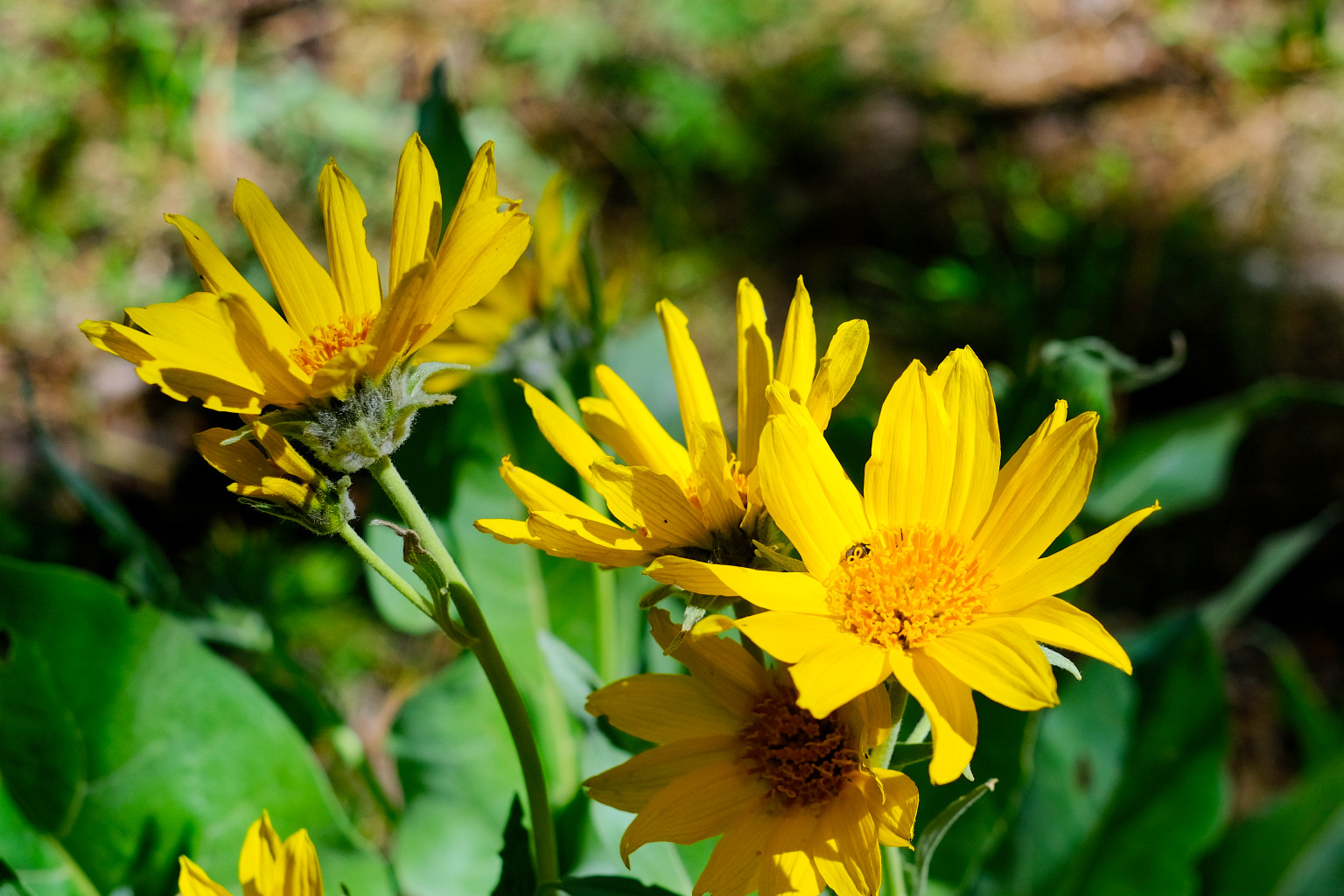
It is the time of year for flower images. Captured with X-Pro3, 2026-06-10 11:21:32, Fujinon 35mm f/1.4, 1/2000sec, f/4, ISO-400, in-camera Velvia simulation, SOOQ with slight crop.
It has been a minute since my last post. Between various tasks, there just was not enough energy left over to write anything. Good news — after months of not paying their bill, a client finally did and put a chunk of cash into my account. I was getting a little concerned that they might stiff us. But they paid. Good.
I am happy to have that one behind me. It is possible that it will reanimate later, but I hope not.
I am looking forward to Field Day this year. I plan to camp with friends at Desert Creek Dry Lake. I think that was our FD site three-years ago.
The truck will not be fully outfitted in time, but that is OK. I am slowly working out what I want to add to my truck and it will take a little time to acquire the equipment and get it installed. The bed liner will be sprayed in Monday. That will be the first step.
I spent a lot of time the last couple of weeks researching maintenance issues with the new truck. The primary item is that US diesel fuel is out of specification for the fuel pump used by Ford. Therefore, supplementation of the diesel fuel is required to ensure sufficient lubrication for the pump. Fortunately (for me), my sales agent at the Ford dealership pointed me in the additive direction.
The other issue that came up is the abandonment of a defined service interval in favor of a sensor and indicator. Vehicles have had service intervals for as long as I can remember. The standard service interval has also been always dependent on the service level of the vehicle in question. Those that see heavy service require a reduced service interval.
A YT content creator, The Motor Oil Geek, has several videos on oil change frequency and the impact on engine wear. He recommends, based on testing, an oil change early in the engine’s life (maybe 500-1,000 miles), then a second after several thousand more miles. These remove residual particles from the build and provide a refreshed filter as well. He also suggests that a regular-period service change also be followed instead of relying on the vehicle’s sensor/algorithm.
I am careful to follow Toyota’s service interval recommendation for my 4Runner. Although I did not use a break-in service for it, the oil was renewed every 10,000 miles. Other maintenance items (coolant, transmission fluid, transfer case, differentials) was also changed. The rig now has 235,000 miles on it and does not use oil or leak. This speak to the quality of Toyota manufacturing. It is a pity they do not offer a diesel pickup in the States.
The Ford pulls the little camper effortlessly. I will no longer be lugging up hills. Moreover, I will replace the little trailer with something just a bit larger this year or next. I want something capable of handling colder weather (the current unit does not) and that provides just a little bit more living space. On my month-long travels, the little camper is a bit cramped and I want more space for when I am working.
The adventure continues. I am liking my truck a lot. It is a lot more vehicle than the 4Runner and requires some adjustment in driving style. I am even more careful choosing a parking spot. I do not mind walking from the rig to the store or whatever.
For the moment, I intend to keep the 4Runner as a daily driver. It seems a bit wasteful to have two vehicles, though. So, we will see.